
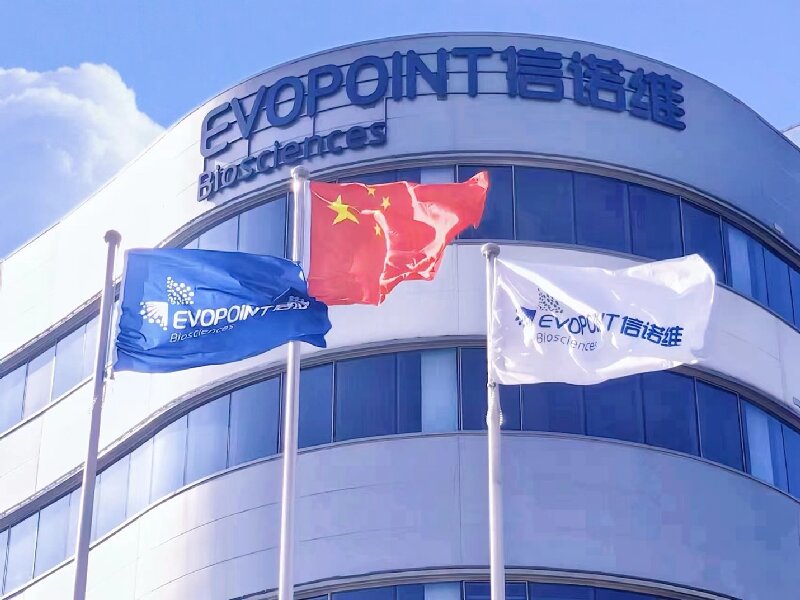
Photo Source: Evopoint Biosciences
On March 20, 2026, Atom Therapeutics Co., Ltd. disclosed in its Hong Kong Stock Exchange listing application that it is embroiled in a high-stakes intellectual property dispute with Evopoint Biosciences Co., Ltd., involving competing claims of trade secret misappropriation and malicious litigation. The dispute, which centers on gout treatment technology, has escalated into cross-claims in which each party is seeking RMB 50 million in damages, and the legal battle is closely intertwined with both companies’ IPO timelines.
According to Atom Therapeutics’ disclosure, the company initially filed a trade secret infringement lawsuit against Evopoint Biosciences with the Shanghai Intellectual Property Court in October 2024. Atom Therapeutics alleges that it had engaged in discussions with a co-founder of Evopoint Biosciences in 2017 regarding potential investment and collaboration opportunities, though no formal cooperation ultimately materialized.
Atom Therapeutics contends that Evopoint’s gout drug candidate, XNW3009—a URAT1 inhibitor that was in Phase IIb/III development until October 2025—was developed based on trade secrets misappropriated during previous discussions.
Atom Therapeutics’s complaint seeks an order requiring Evopoint Biosciences to cease the alleged trade secret misappropriation, terminate all related research, clinical trials, and commercialization activities, and pay RMB 50 million in economic damages and reasonable legal expenses.
Evopoint Biosciences, however, has vigorously denied the allegations. In August 2025—following Atom Therapeutics’s initial filing—Evopoint Biosciences filed a counterclaim in the same court, accusing Atom Therapeutics’ of “malicious initiation of intellectual property litigation.” Evopoint Biosciences asserts that Atom Therapeutics’s claims lack factual basis and may be barred by the statute of limitations. According to Evopoint, the true purpose of Atom Therapeutics’s lawsuit is to disrupt Evopoint’s normal business operations and interfere with its IPO process.
Evopoint’s counterclaim demands that Atom Therapeutics and its legal representative, Shi Dongfang, jointly pay RMB 50 million in economic damages and reasonable legal costs, as well as issue a public apology in national media.
The procedural history of the case took a notable turn in November 2025. Atom Therapeutics voluntarily withdrew its original complaint, and within one week, refiled a substantially identical lawsuit on the same grounds. The court accepted the refiled case that same month. Atom Therapeutics explained that the withdrawal and refiling were intended to “facilitate full communication with the court on administrative matters.” In commercial litigation practice, such procedural maneuvers are occasionally viewed as strategic adjustments aimed at optimizing litigation strategy or evidentiary presentation.
To date, the Shanghai Intellectual Property Court has held two substantive hearings in the case. The first hearing, focused on evidence exchange and cross-examination, took place on November 27, 2025. The second hearing followed on January 29, 2026. As of Atom Therapeutics’ latest listing application in March 2026, the court has not yet issued any final judgment.
The intensity of the dispute is closely tied to both companies’ current development trajectories. Atom Therapeutics is actively pursuing a main board listing on the Hong Kong Stock Exchange, and its prospectus devotes attention to disclosing the risks associated with the litigation. Evopoint, for its part, submitted its IPO application to the Shanghai Stock Exchange’s STAR Market in December 2025, with its prospectus also explicitly referencing the ongoing dispute.
For both biotech companies—neither of which has any product approved for commercial sale and both of which continue to operate at a loss—an unresolved material litigation could influence regulatory review and investor confidence, potentially affecting the outcome of their respective IPO efforts.
Notably, in October 2025, during its IPO preparation period, Evopoint Biosciences discontinued the Phase IIb/III clinical development of XNW3009, the product at the center of the dispute. The company cited “development strategy adjustments or clinical data falling short of expectations” as the official reason. Whether this decision was directly prompted by the litigation remains unclear, but the timing has added further complexity to the case.
Atom Therapeutics was founded in 2012 and focuses on the research and development of innovative drugs for metabolic, inflammatory and cardiovascular diseases. Its core product, ABP-671, is a next-generation URAT1 inhibitor for the first-line treatment of gout, currently undergoing Phase IIb/III clinical trials in both China and the United States. Evopoint Biosciences, established in 2017, specializes in the development of innovative drugs in areas such as oncology, anti-infectives, and metabolic diseases.
The trade secret infringement litigation remains in the first-instance phase, with no final judgment issued to date. The court’s eventual ruling could have significant implications for both companies’ intellectual property positions and their ongoing efforts to access public capital markets.