



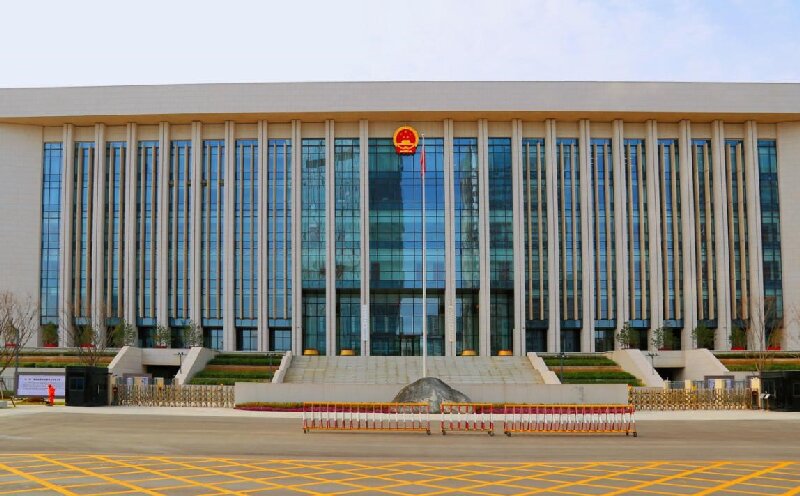
On April 7, 2026, China's Supreme People's Court adopted the newly revised Interpretation of the Supreme People's Court on the Application of Punitive Damages in the Trial of Civil Disputes over Infringement of Intellectual Property Rights at the 1972nd Session of its Judicial Committee. Taking effect on May 1, 2026, the Interpretation repeals the 2021 version and introduces stricter rules targeting malicious actors who "engage in IP infringement as a business" – imposing a sales profit calculation base for such actors versus an operating profit base for ordinary infringers. The Interpretation also expands the definition of intentional conduct, permits non-integer multipliers up to a cap of five times the base amount, imposes a procedural bar on separate punitive damages claims brought after the first instance, and excludes ordinary unfair competition acts (except trade secrets) from punitive damages.
A translation of the newly revised Interpretation follows:
Interpretation of the Supreme People's Court on the Application of Punitive Damages in the Trial of Civil Disputes over Infringement of Intellectual Property Rights
(Adopted at the 1972nd Session of the Judicial Committee of the Supreme People's Court on April 7, 2026; effective as of May 1, 2026)
For the purpose of imposing legal sanctions against serious IP infringements and strictly implementing the punitive damages system for IP rights, this Interpretation is formulated in accordance with the Civil Code of the People's Republic of China, the Copyright Law of the People's Republic of China, the Trademark Law of the People's Republic of China, the Patent Law of the People's Republic of China, the Anti-Unfair Competition Law of the People's Republic of China, the Seed Law of the People's Republic of China, the Civil Procedure Law of the People's Republic of China, and other relevant laws, in light of judicial practice.
Article 1 Where a plaintiff claims that the defendant intentionally infringes upon the plaintiff's legally held IP rights and the circumstances are serious, and requests the court to order the defendant to bear punitive damages, the people's court shall hear the case in accordance with the law.
Article 2 If a plaintiff seeks punitive damages, he/she shall clearly state the specific amount of damages, the calculation method, and the supporting facts and reasons.
Article 3 If a plaintiff adds a claim for punitive damages before the conclusion of the first-instance court debate, the people's court shall permit it. If such a claim is added at the second-instance stage, the people's court may conduct mediation based on the principle of voluntariness; if mediation fails, the claim shall not be supported.
Article 4 Where a plaintiff claims compensatory damages in an IP infringement action but does not claim punitive damages, and, after being informed or notified by the people's court, still does not make such claim, and subsequently files a separate action based on the same infringing facts seeking punitive damages after the original action concludes, the people's court shall not accept it.
Article 5 Unless otherwise provided by law, if a plaintiff seeks punitive damages against a defendant's intentional unfair competition acts other than trade secret infringement, the people's court shall not support such claim.
Article 6 In determining the existence of intent to infringe IP rights, the people's court shall comprehensively consider factors such as the type of IP object, the status and well-known nature of the right, and the relationship between the defendant and the plaintiff or interested parties. Under any of the following circumstances, the people's court may find that the defendant acted with intent to infringe IP rights, unless the defendant presents rebuttal evidence sufficient to prove otherwise:
(1) continuing the infringing conduct after receiving an effective notice from the plaintiff or an interested party;
(2) the defendant, or its legal representative or manager, is or was the legal representative, manager, or de facto controller of the plaintiff or an interested party, and knew or should have known of the IP right at issue;
(3) there exists or existed an employment, service, cooperation, license, distribution, agency, representation or similar relationship with the plaintiff or an interested party, and through such relationship, the defendant had access to the IP right at issue;
(4) there exists or existed business dealings or negotiations for a contract with the plaintiff or an interested party, and through such dealings or negotiations, the defendant had access to the IP right at issue;
(5) committing acts of piracy, counterfeiting a registered trademark, or passing off another's patent;
(6) after reaching a settlement with the plaintiff and agreeing to cease infringement, again committing the same or similar infringing acts;
(7) concealing de facto control relationships or evading legal liability for infringement of the IP right at issue by, for example, establishing affiliated companies, changing the legal representative or controlling shareholder, setting up a company in a concealed manner, or executing a liability waiver agreement;
(8) other circumstances that may be found to constitute intent.
Article 7 In determining that the circumstances of an IP infringement are serious, the people's court shall comprehensively consider factors such as the means and frequency of infringement, the duration, geographic scope, scale, and consequences of the infringing acts, and the infringer's awareness of and attitude toward the infringement. Under any of the following circumstances, the people's court shall find the circumstances serious:
(1) committing the same or similar infringing acts after having been subject to administrative penalties or court judgments holding them liable for infringement;
(2) refusing without justifiable reason to comply with a preservation ruling;
(3) forging, destroying, or concealing evidence of infringement;
(4) engaging in infringement as a principal business or deriving the main source of profit from infringing gains—i.e., engaging in IP infringement as a business;
(5) obtaining huge gains from infringement, or the infringing acts causing serious harm to the right holder's goodwill or market share;
(6) the infringing acts harming or potentially harming national or public interests;
(7) other circumstances that shall be found as serious.
Article 8 In determining the amount of punitive damages, the people's court shall, in accordance with the relevant laws, take the plaintiff's actual loss, the defendant's illegal gains, or the defendant's gains from infringement as the calculation base. The calculation base shall not include the plaintiff's reasonable expenses incurred to stop the infringement. Where laws provide otherwise, such provisions shall apply. If the actual loss, the illegal gains, or the gains from infringement are all difficult to calculate, the people's court shall reasonably determine the calculation base for punitive damages by reference to the royalty for licensing the right in accordance with law. Statutory damages shall not serve as the calculation base for punitive damages.
Article 9 Where the defendant's illegal gains or gains from infringement are used as the calculation base for punitive damages, operating profit may be used as a reference. If the defendant engages in IP infringement as a business, sales profit may be used as a reference. If the profit margin cannot be determined, the average profit margin for the same industry for the same period published by statistical authorities, industry associations, or the right holder's profit margin may be used as a reference.
Article 10 If the people's court orders the defendant to provide books, records, materials, or the like related to the infringing acts that are in the defendant's possession, and the defendant refuses without justifiable reason or provides false books, records, or materials, the people's court may determine the calculation base for punitive damages based on the plaintiff's claims and the evidence on record. If the circumstances constitute those set forth in Article 114 of the Civil Procedure Law, legal liability shall be pursued accordingly. Where laws provide otherwise, such provisions shall apply.
Article 11 In determining the multiplier for punitive damages, the people's court shall comprehensively consider factors such as the degree of the defendant's subjective fault and the seriousness of the infringing circumstances. The multiplier for punitive damages shall be determined within the statutory range and need not be an integer.
Article 12 The total amount of damages determined by a people's court applying punitive damages shall not exceed five times the calculation base. The right holder's reasonable expenses incurred to stop the infringement shall be calculated separately from the total amount.
Article 13 If a fine or criminal fine has been imposed and fully executed for the same infringing act, the people's court shall consider this in determining the multiplier for punitive damages.
Article 14 This Interpretation shall take effect on May 1, 2026. Upon its effectiveness, the Interpretation of the Supreme People's Court on the Application of Punitive Damages in the Trial of Civil Cases Involving Infringement of Intellectual Property Rights (Fa Shi [2021] No. 4) shall be repealed simultaneously. For cases in which a legally effective judgment has been rendered before the effectiveness of this Interpretation, this Interpretation shall not apply if a party applies for retrial or a retrial is decided through the adjudicative supervision procedure after this Interpretation takes effect.